 EN
EN
Quick Links

With the deepening development of automotive electrification and intelligence, motors have become core power and control components in vehicles. They are widely used in drive systems (new-energy vehicle traction motors), body control applications (power tailgate motors, window motors, seat adjustment motors), and auxiliary systems (cooling fan motors, power steering motors). As the core unit that controls motor start/stop, speed, and direction, an automotive motor drive system must deliver efficient, stable, and reliable power output under harsh onboard conditions such as high temperature, vibration, strong electromagnetic interference (EMI), and wide voltage fluctuations. As a core passive component in motor drive systems, the inductor performs key functions such as energy storage, filtering, choking, and suppressing current spikes. Its selection directly determines conversion efficiency, operating stability, electromagnetic compatibility (EMC), and service life.
1-Working principle of automotive motor drive systems and the core role of inductors
The core function of an automotive motor drive system is to receive commands from the vehicle control unit (VCU) or a local control unit, convert electrical energy from the onboard power supply into mechanical energy, and drive the motor to achieve precise start/stop, speed regulation, and forward/reverse control. At the same time, it uses current and speed feedback signals to implement closed-loop control and ensure smooth and safe motor operation. The circuit typically includes a power management module, MCU control module, power drive module, current/speed detection module, and EMI filtering module.
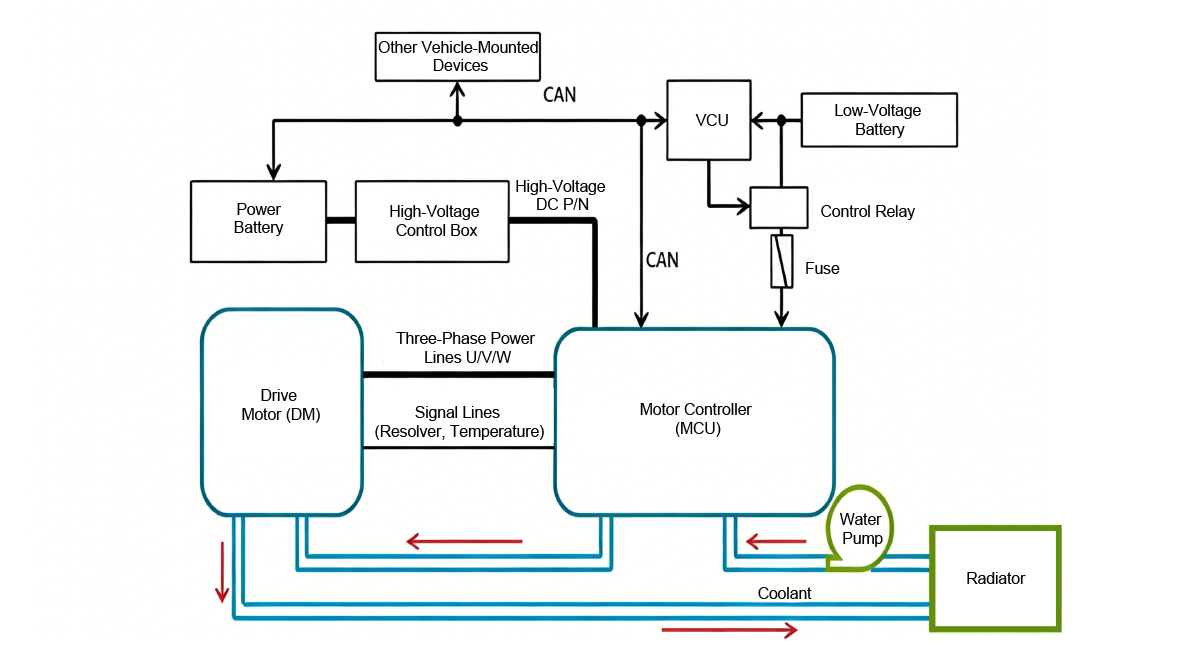
Figure 1. Block diagram of a new-energy vehicle motor drive system
Other vehicle-mounted devices; Power battery; High-voltage control box; High-voltage DC P/N; VCU; Low-voltage battery; Control relay; Fuse; Drive motor (DM); Three-phase power lines U/V/W; Signal lines (resolver, temperature); Motor controller (MCU); Water pump; Coolant; Radiator.
1.1 The role of inductors in the power drive loop
Automotive motor drives commonly use PWM (pulse width modulation) control. By switching power devices (MOSFETs/IGBTs) on and off, they regulate output voltage and current to control motor speed and torque. Inductors play a core role in the power drive loop, mainly in the following ways:
Suppressing current spikes: When the motor starts or stops, changes speed, or when power devices switch, instantaneous current spikes are generated. These spikes can stress power devices (MOSFETs/IGBTs) and driver chips and may even damage the components. The inductor limits the rate of current change (di/dt) through its inductive reactance, effectively suppressing current spikes, protecting core devices in the drive loop, and extending component life.
Smoothing motor current: PWM control causes the output current to ripple. If this current is fed directly into the motor, it can lead to increased vibration, higher noise, and greater winding losses. By continuously storing and releasing energy, the inductor smooths the current ripple and makes the motor input current more stable, improving operating stability.
1.2 The role of inductors in power management and filtering
The power supply in automotive motor drive systems is divided into two categories: onboard low-voltage power supplies (12 V/24 V) for control modules and driver chips, and high-voltage power supplies in new-energy vehicles for power drive modules. Inductors play the following major roles in power management and filtering:
DC-DC conversion: In low-voltage supply circuits, a DC-DC step-down converter is needed to convert the onboard 12 V/24 V voltage into the 5 V and 3.3 V levels required by MCUs and sensors. As the core energy-storage element of the DC-DC circuit, the inductor stores and releases energy, maintains output-voltage stability, and prevents voltage fluctuations from affecting normal operation of the control module.
EMI suppression: When the motor drive system is operating, switching of power devices generates high-frequency interference. This interference can be conducted through the power lines to other onboard electronic systems such as navigation or radio, affecting their normal operation. Common mode chokes, together with X and Y capacitors, form an EMI filter circuit that removes high-frequency interference from the power lines, suppresses electromagnetic radiation, and reduces the impact of external interference on the motor drive system.
2-Inductor requirements for automotive motor drive systems
Automotive motor drive systems are often installed in harsh environments such as engine compartments and chassis areas, where they are exposed to high temperature and humidity, high-frequency vibration, and strong electromagnetic interference for long periods. They must meet automotive-grade reliability requirements and adapt to wide voltage fluctuations and high current surges, which places strict requirements on inductor performance, structure, and reliability.
3- CODACA's inductor solutions for motor drive systems
3.1 Automotive-grade High Current Power Inductor
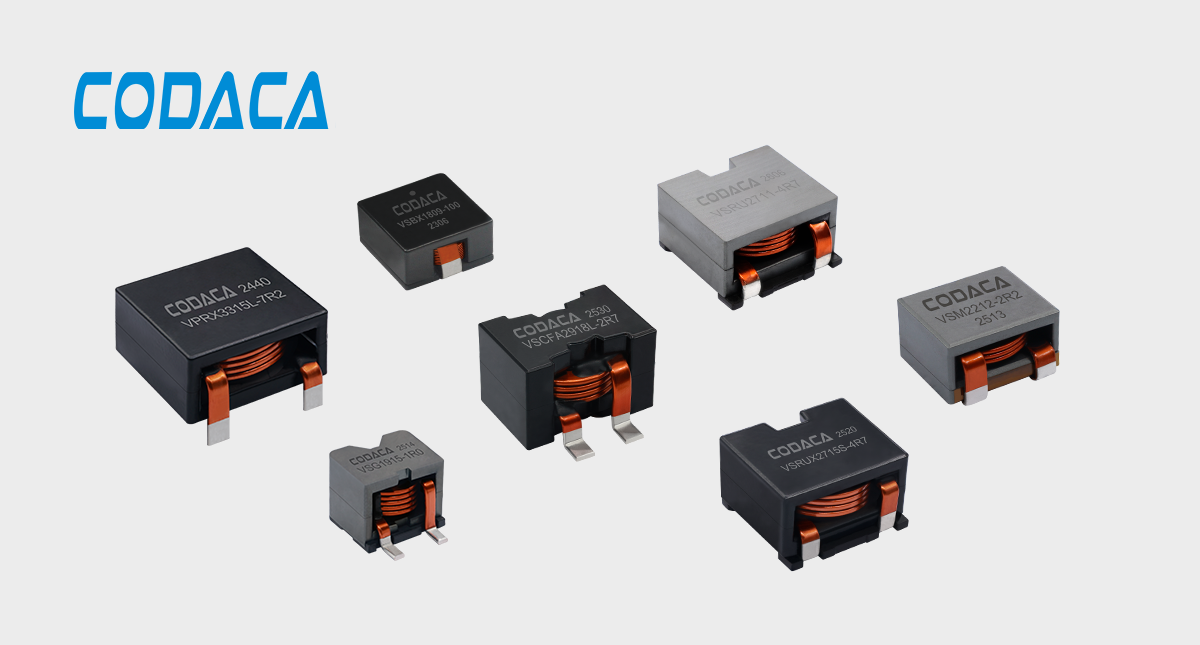
In motor drive systems, high current power inductors are mainly used in DC-DC converters and filtering circuits. CODACA's automotive-grade high current power inductors offer low loss and high saturation current, with saturation current up to 422 A and an operating temperature range of -55°C to +155°C, making them suitable for complex automotive electronic environments.
3.2 Automotive-grade Molding Power Choke
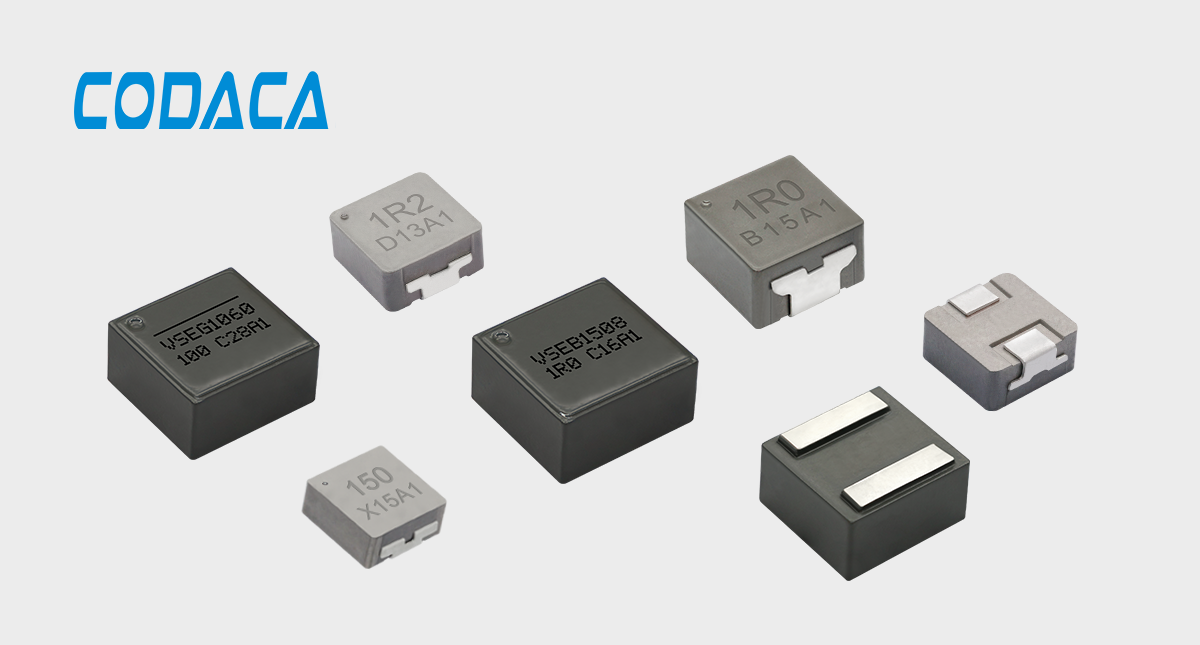
CODACA's automotive-grade molding power choke uses low-loss magnetic powder core materials and innovative electrode technology to solve technical challenges such as coil misalignment and product cracking during molding. It reduces overall inductor loss by more than 30%, supports operating temperatures up to 170°C, achieves power efficiency up to 98%, and effectively improves the reliability of motor drive systems and the conversion efficiency of DC-DC circuits.
3. 3 Automotive-grade Rod Inductor
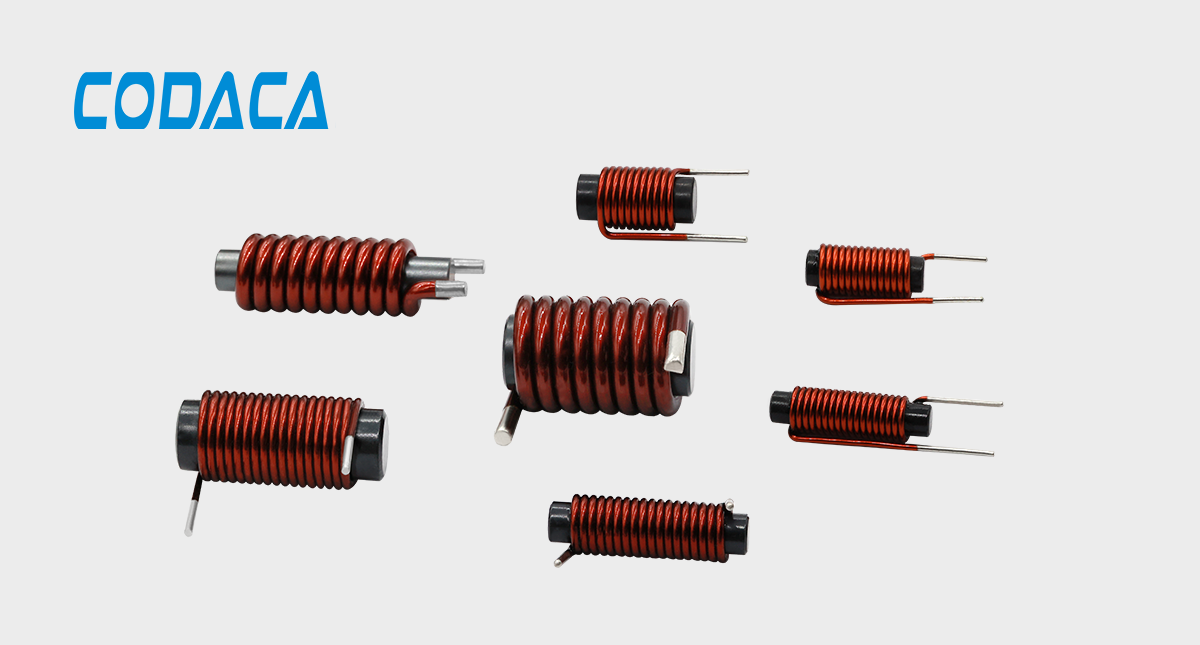
CODACA has an experienced R&D team that can quickly provide customized automotive-grade rod inductor solutions with different characteristics and structures based on customer requirements.
3.4 EMI components
Common mode chokes, beads, and other magnetic components are widely used in automotive motor drive systems and power filtering circuits to suppress noise interference on signal lines and power lines.