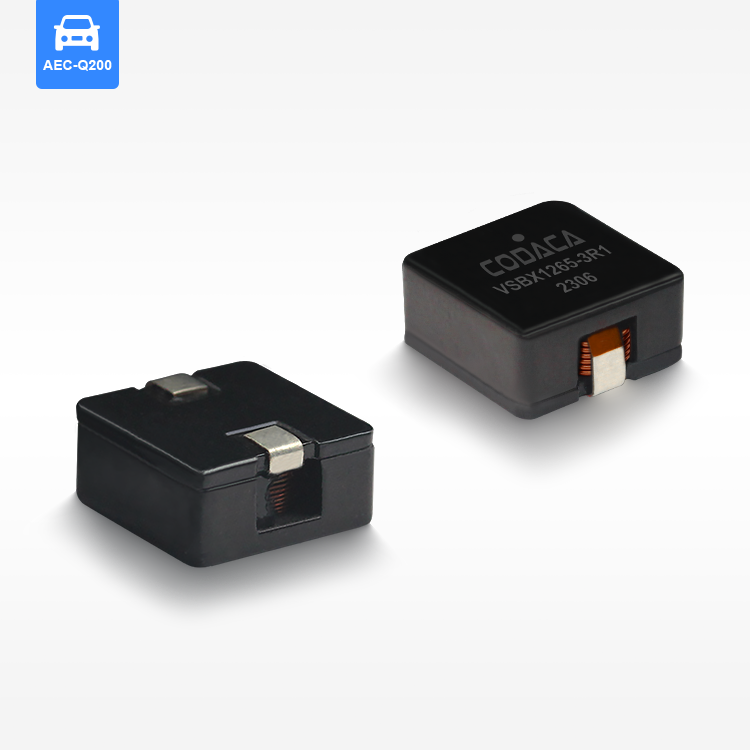
Superior Current Ripple Cancellation Technology
The coupled inductor's most remarkable feature lies in its advanced current ripple cancellation capabilities that dramatically improve power supply performance and efficiency. This innovative technology leverages the magnetic coupling between windings to create opposing magnetic flux patterns that naturally cancel current ripples and harmonics. When current flows through one winding, it generates a magnetic field that induces an opposing field in the coupled winding, effectively reducing the net ripple current seen by the power supply circuit. This phenomenon occurs because the coupled inductor's shared magnetic core allows precise control over the magnetic flux interaction between windings. The result is significantly reduced input and output current ripple compared to traditional inductor configurations, leading to cleaner power delivery and improved electromagnetic compatibility. Engineers benefit from this technology through reduced filtering requirements, as the coupled inductor inherently provides superior harmonic suppression without additional components. The ripple cancellation effect becomes particularly pronounced in interleaved power converter topologies where multiple switching phases operate in coordination. The magnetic coupling ensures that ripple currents from different phases oppose each other, creating a cumulative cancellation effect that dramatically reduces overall system ripple. This technology enables designers to achieve exceptional power quality while using fewer external filtering components, resulting in more compact and cost-effective solutions. The coupled inductor's ripple cancellation capability also extends battery life in portable applications by reducing unnecessary current variations that would otherwise waste energy. Power management systems benefit from improved regulation stability and faster transient response due to the reduced ripple content. The technology proves especially valuable in sensitive applications where power quality directly impacts performance, such as precision measurement equipment and high-performance computing systems.